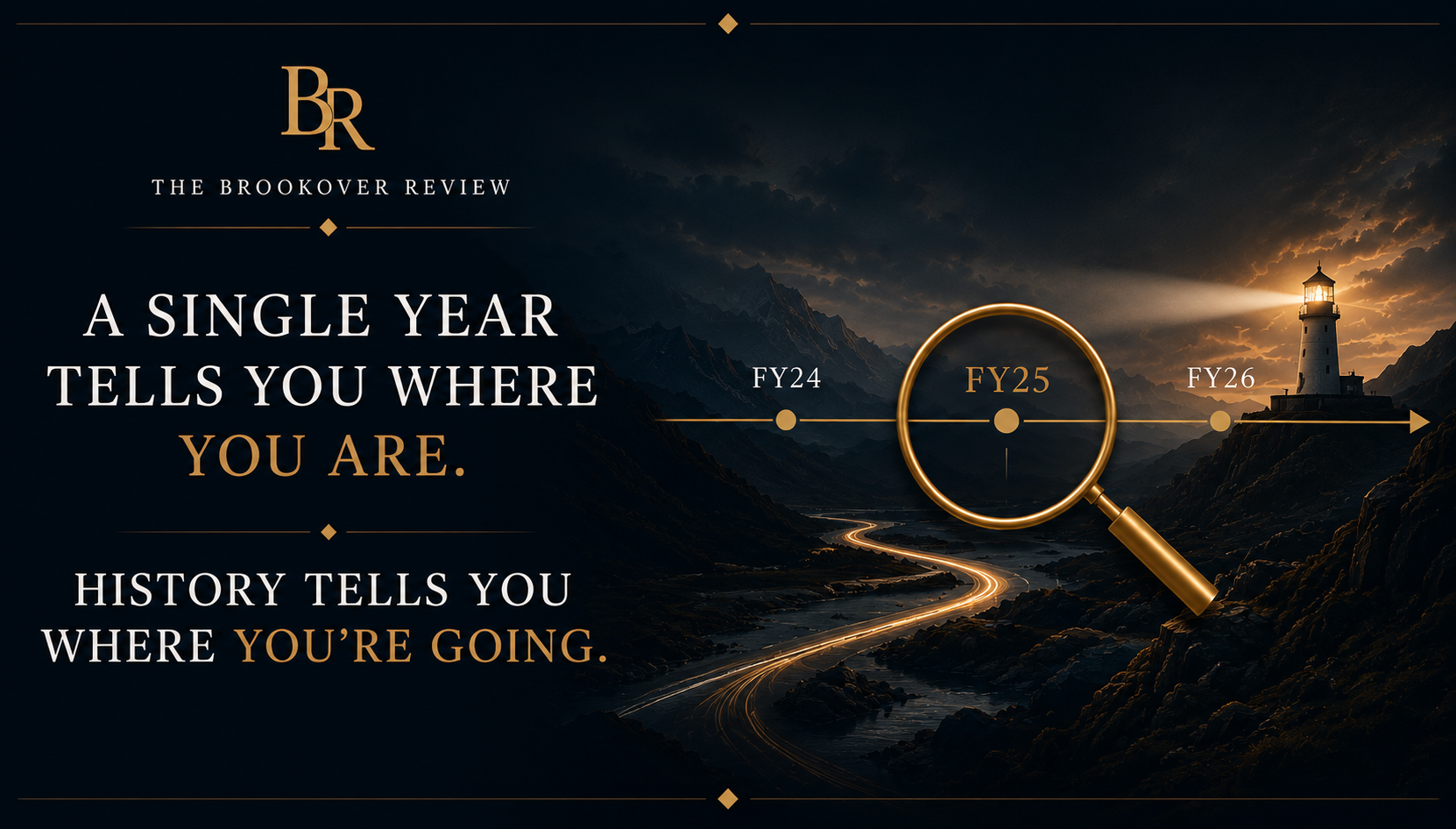
The federal government doesn't manage public resources one year at a time. It shouldn't report on them that way either.
When OMB Circular A-136 was revised for FY25, one of its most notable changes was the transition from comparative financial statements to a current-year-only presentation. A year later, the FY26 revision restored the two-year presentation format.
If one views the FY25 change through the lens of appropriations law, it could appear reasonable. One-year appropriations exist to finance a single fiscal year. What that framing overlooks, however, is that federal financial statements do not present a single appropriation in isolation. They consolidate activity across all fund types — unexpired and expired appropriations alike — regardless of the presentation format. A current-year presentation does not narrow the picture to a single appropriation year. It narrows the picture to a single reporting period.
And that distinction matters — because OMB Circular A-136 governs financial reporting, not appropriations law.
Those are closely related disciplines, but they answer fundamentally different questions.
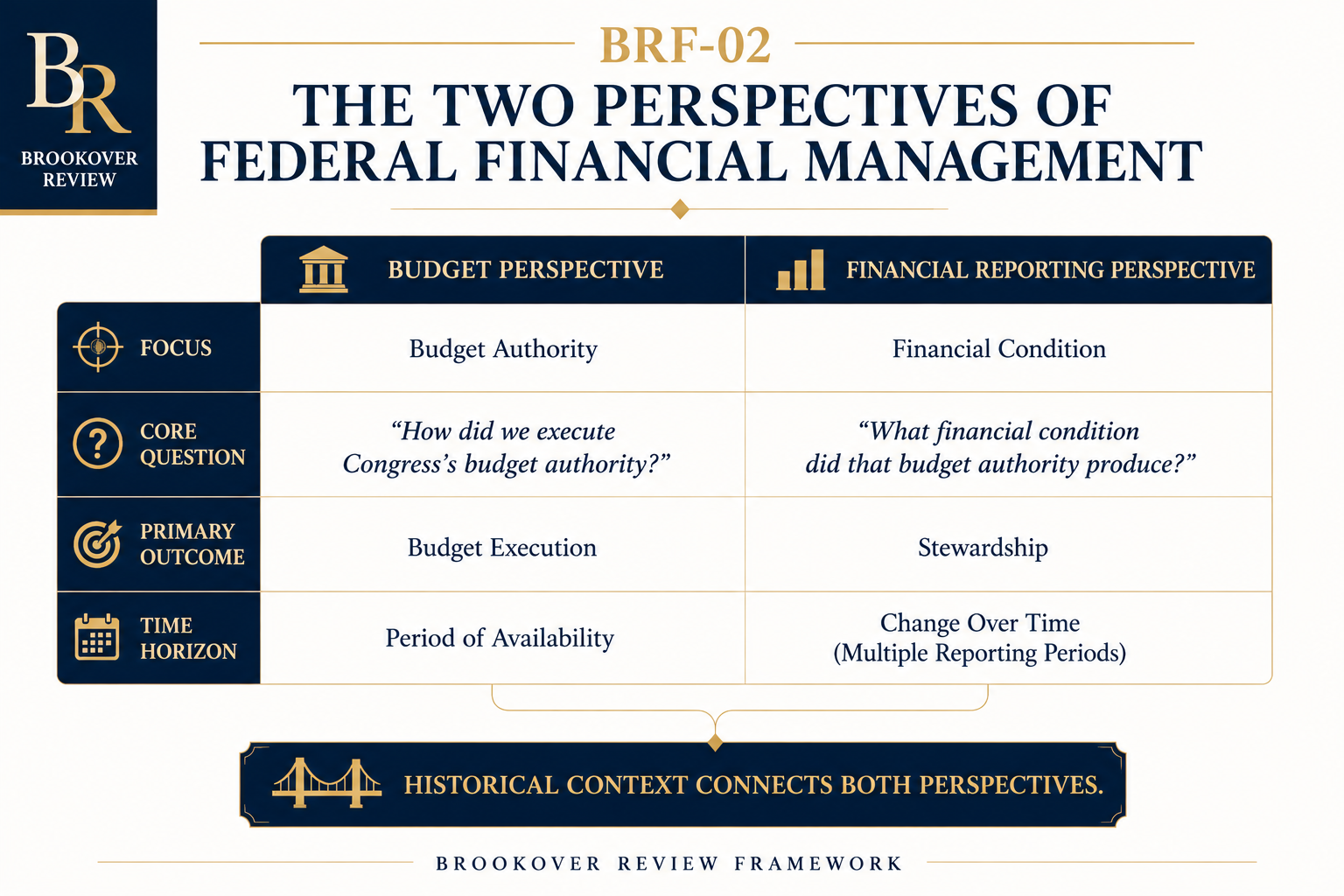
Two Perspectives. Two Different Questions.
The budget perspective asks: "How did we execute Congress's budget authority?"
The financial reporting perspective asks: "What financial condition did that budget authority produce?"
The first evaluates budget execution.
The second evaluates stewardship.
That distinction fundamentally changes how we should evaluate the usefulness of a single-year presentation. If the objective is to understand budget execution, a current-year presentation can appear reasonable. If the objective is to evaluate stewardship over public resources, historical context becomes indispensable.
What Financial Statements Are Actually For
Federal financial statements were never intended to simply record what exists at the end of a fiscal year. They exist to communicate how an agency's financial condition has changed over time and whether public resources continue to be managed responsibly.
Consider the breadth of activities reflected throughout the federal government's financial statements. Some report dedicated collections that finance continuing operations. Others report long-term obligations that remain on the government's books for decades. Despite their different financial characteristics, they all share one important attribute.
They cannot be fully understood through a single reporting period.
A current-year presentation provides a snapshot. Historical context reveals direction. That longer view transforms financial statements from records of what exists into evidence of what is changing.
Stewardship cannot be evaluated from a single point in time because stewardship is fundamentally an assessment of change.
Join the Practitioners Reading Ahead
Independent, practitioner-written analysis on federal finance, systems, and audit readiness — delivered before it hits your feed.
Stewardship Is About Trajectory
Agencies are not judged solely by the balances they report at the end of a fiscal year. They are judged by how those balances evolve. Is financial position improving or deteriorating? Are operating costs becoming more or less efficient? Are long-term obligations becoming more or less significant? Are programs maintaining their financial sustainability?
These are not questions about ending balances. They are questions about trajectory — and trajectory cannot be measured without a longer view.
A Balance Sheet becomes more meaningful when readers can determine whether an agency's financial position is strengthening or weakening.
The Statement of Net Cost becomes more informative when trends in operating costs can be evaluated rather than viewed in isolation.
The Statement of Changes in Net Position derives much of its value from understanding movement over time instead of simply reporting an ending balance.
The Right Question
The question, therefore, should never have been whether agencies should report one year or two years.
The question should have been whether financial statement users are provided sufficient context to evaluate stewardship.
Congress, agency leadership, inspectors general, auditors, oversight organizations, and ultimately the American taxpayer are not simply interested in an agency's financial position today. They need to understand whether that position is improving, remaining stable, or deteriorating. They need to understand whether today's financial condition reflects sound stewardship of public resources.
Those questions cannot be answered from a single year's presentation alone.
More Than a Reporting Column
The FY26 decision to restore comparative financial statements was therefore more than the return of another reporting column.
It restored an essential element of federal financial reporting.
Because context is a prerequisite for stewardship.
And stewardship is not measured at a single moment in time.
Stewardship is measured over time.
The views expressed in this article are those of the author and do not necessarily reflect the views of any employer, client, agency, or organization. References to OMB Circular A-136 are based on publicly available policy guidance.
About The Brookover Review
The Brookover Review is an independent publication dedicated to advancing federal financial management through practical insights, original frameworks, and thoughtful discussion. Subscribe to receive monthly bulletins, future articles, and original frameworks covering federal financial management, financial systems, audit readiness, and digital transformation.