Three days at the Association of Government Accountants (AGA) Professional Development Training reinforced an observation that extends well beyond a single conference session.
Federal financial management is entering an important period of transformation. Across presentations, discussions, and conversations with practitioners, there was a shared commitment to improving stewardship through stronger financial management, modernized systems, improved data quality, and sustainable audit readiness.
One discussion, however, stood out.
During a session on the Department of Defense's continued pursuit of a clean audit opinion, the possibility of extending the federal financial reporting timeline from the current 45-day reporting requirement to approximately 120 days after fiscal year-end generated considerable discussion. Such a change, if ultimately pursued, would likely require a fundamental revision to the current government-wide financial reporting timeline and could significantly delay issuance of the Financial Report of the United States Government.
The discussion naturally raises an important question.
Should federal financial reporting prioritize timeliness, or should it prioritize reliability?
Timely financial reporting strengthens accountability by providing Congress, agency leadership, oversight organizations, and the public with current financial information. It also encourages organizations to continuously improve financial management processes rather than relying on extended post-close activities.
Conversely, large, decentralized organizations face extraordinary challenges in completing reconciliations, resolving accounting issues, coordinating audit activities, and preparing consolidated financial statements within compressed reporting timelines. Additional time may improve the overall quality of financial reporting while reducing extraordinary year-end efforts.
I believe that framing asks the wrong question.
The more important question is not how many days agencies need after September 30. The more important question is whether we are practicing good stewardship before September 30.
Join the Practitioners Reading Ahead
Independent, practitioner-written analysis on federal finance, systems, and audit readiness — delivered before it hits your feed.
Why the Reporting Timeline Matters
The implications of extending agency reporting timelines extend well beyond individual organizations.
Under the current reporting framework, agencies issue audited Annual Financial Reports approximately 45 days after fiscal year-end. That accelerated reporting schedule enables the Department of the Treasury, working in coordination with the Government Accountability Office (GAO), to prepare and publish the Financial Report of the United States Government by approximately December 15.
Although federal statute permits Treasury to submit the government-wide report as late as March 31 following fiscal year-end, the accelerated reporting model adopted through Office of Management and Budget (OMB) policy reflects an important principle: financial information has greater value when it is timely.
Timely financial reporting strengthens executive decision-making, congressional oversight, public accountability, and confidence in the government's stewardship of public resources.
Extending agency reporting timelines from approximately 45 days to 120 days would fundamentally alter that reporting framework. Treasury would not receive audited agency financial information until late January, leaving significantly less time to prepare the consolidated financial statements, complete GAO's audit procedures, resolve audit matters, and publish the government's audited financial report.
Even if such a timeline could be accommodated within the statutory March 31 deadline, the broader consequence would remain the same.
Information intended to support executive decision-making, congressional oversight, and public accountability would instead become increasingly retrospective as the government moved further into the subsequent fiscal year, diminishing much of its value as a timely management tool.
That is why I believe the discussion should not begin with whether agencies need additional time after September 30.
It should begin with how organizations can consistently produce reliable financial information within the reporting framework that already exists.
Looking Beyond the Reporting Deadline
While some organizations face significantly greater complexity than others, the broader executive branch demonstrates that timely reporting and reliable financial information are not mutually exclusive objectives.
Each year, most CFO Act agencies successfully meet the current reporting deadlines while earning unmodified audit opinions or managing a limited number of material weaknesses. Although every agency faces unique operational and accounting challenges, these organizations demonstrate that reliable financial reporting is rarely the product of year-end effort alone.
Instead, it reflects disciplined financial management practiced throughout the fiscal year.
Successful organizations do not wait until year-end to discover reconciliation issues, evaluate internal controls, or resolve accounting differences.
They build repeatable processes that continuously identify, investigate, and remediate issues long before financial statements are prepared.
Year-end reporting should validate the effectiveness of an organization's financial management processes — not compensate for weaknesses that accumulated throughout the fiscal year.
BRF-03: The Stewardship Pyramid
The relationship between daily financial operations and public accountability can be viewed through what I refer to as the Brookover Review Framework (BRF-03): The Stewardship Pyramid.
The framework illustrates a simple but important principle.
Public stewardship is not built during year-end close. It is built by strengthening each layer beneath it throughout the fiscal year.
Organizations begin with accurate transactions, supported by effective internal controls. Those controls enable continuous reconciliations, producing reliable financial information that supports sustainable audit readiness. Together, these elements culminate in the ultimate objective of federal financial management: responsible stewardship of public resources.
When weaknesses exist at the foundation, every layer above becomes increasingly difficult to sustain. Conversely, organizations that strengthen the foundation transform year-end reporting from an exercise in remediation into a confirmation of disciplined financial management.
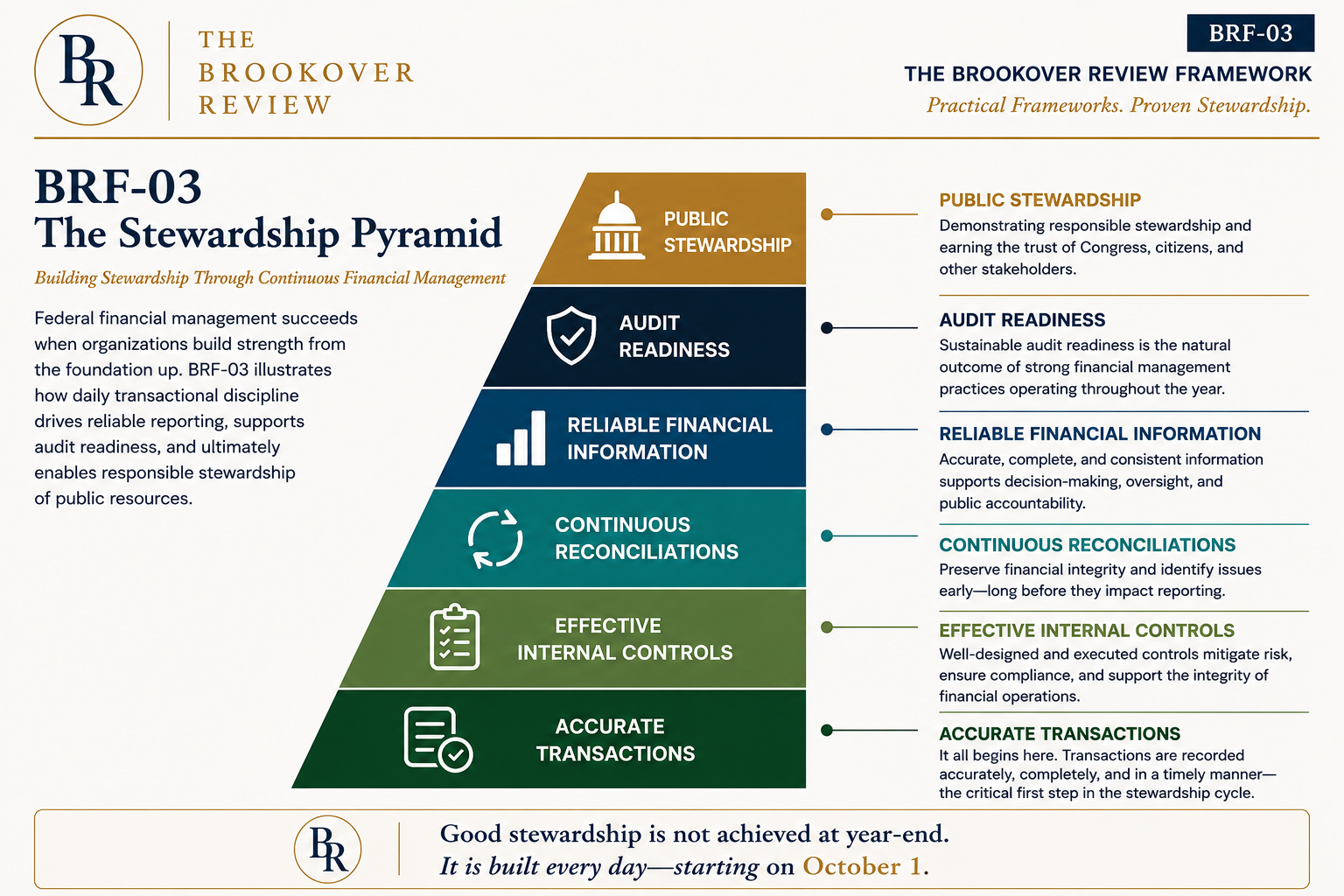
Figure 1. Brookover Review Framework (BRF-03): The Stewardship Pyramid
Sustainable Audit Readiness Begins at the Transactional Level
Sustainable audit readiness is not achieved by working harder during year-end close. It is achieved by strengthening the foundation upon which financial reporting is built. As explored in Audit Readiness Is Not a Project, that foundation is a defensible chain — rationale, documentation, and reliable data — maintained continuously, not assembled at year-end.
That foundation begins at the transactional level.
Every transaction should be recorded accurately, supported by effective internal controls, and processed through disciplined financial management practices that minimize downstream reporting issues.
Likewise, key financial relationships should remain intact throughout the fiscal year — not simply at year-end. This includes routinely reconciling Fund Balance with Treasury by verifying enterprise resource planning (ERP) system cash balances against the Central Accounting Reporting System (CARS), continuously monitoring Treasury Account Symbol (TAS) trial balances, performing reimbursable activity analyses by trading partner within each Treasury Account Symbol to identify posting and timing differences, and preserving the relationships between budgetary and proprietary accounts through Treasury tie-point reconciliations. Together, these activities provide early visibility into discrepancies, strengthen the integrity of financial reporting, and reduce the risk of unresolved issues accumulating until year-end.
Organizations that consistently perform these activities reduce year-end risk because financial reporting becomes the natural outcome of disciplined financial management rather than an annual recovery effort.
Audit readiness should not be viewed as a seasonal initiative. It should be viewed as a continuous operational capability.
Good Stewardship Begins on October 1
Perhaps the profession should spend less time asking whether federal financial reporting requires 45 days or 120 days.
Perhaps it should spend more time asking how financial management organizations can strengthen stewardship every day of the fiscal year.
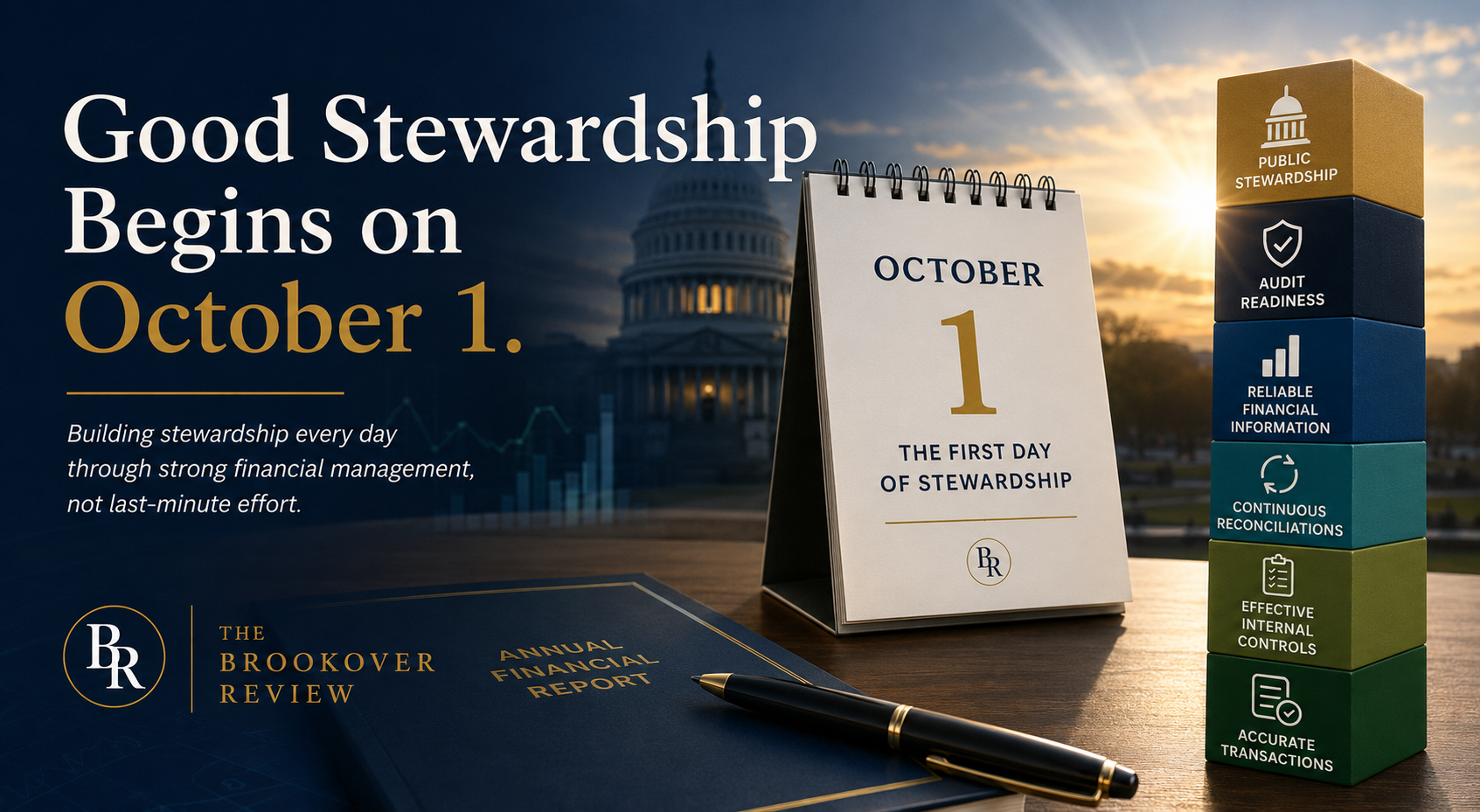
Good stewardship does not begin after the fiscal year ends. It begins on October 1. The first day of the new fiscal year.
Key Disciplines
- Every reconciliation completed on time.
- Every internal control executed as designed.
- Every accounting issue resolved before year-end.
- Every transaction accurately recorded.
- Every Governmentwide Treasury Account Symbol Adjusted Trial Balance System (GTAS) submission validated throughout the reporting cycle.
These are the activities that ultimately determine whether year-end financial reporting becomes a confirmation of disciplined financial management or an exercise in remediation.
If additional reporting time is ultimately determined to be necessary, it should be viewed as a transitional measure while organizations continue strengthening the people, processes, controls, and systems that support reliable reporting — not as the long-term objective.
Federal financial reporting exists to demonstrate stewardship of public resources.
The goal should not be choosing between timeliness and reliability. The goal should be building organizations capable of consistently delivering both.
Because, in the end, stewardship is not demonstrated during year-end close. It is built every day — starting on October 1.
The views expressed in this article are those of the author and do not necessarily reflect the views of any employer, client, agency, or organization. Examples referenced are intended to illustrate broader stewardship and financial management concepts.
About The Brookover Review
The Brookover Review is an independent publication dedicated to advancing federal financial management through practical insights, original frameworks, and thoughtful discussion. Subscribe to receive monthly bulletins, future articles, and original frameworks covering federal financial management, financial systems, audit readiness, and digital transformation.